
This analysis is based on the quarterly earnings for 724 companies.
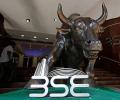
In terms of stock selection, India continues to benefit from two phenomena - the big getting bigger and availability of quality stocks in relative abundance compared with its Asian peers.

World trade has been growing slower than world GDP since 2012.

TCS was the top gainer in the Sensex pack, rising around 4 per cent, followed by ONGC, ICICI Bank, HDFC Bank, Dr Reddy's, HDFC and HCL Tech. NSE Nifty advanced 76.65 points to 14,581.45.

Indian companies struggle to escape debt burden as profit slows.

Leaving behind the luxe life and dapper suits of foreign banks, Puri and his team at the upstart venture shared fizz drinks, wore a footwear brand popular among the middle class, shared a rat-infested space in a yet-to-be gentrified work space to plan and execute it.

It took India's IT-BPO sector just over a decade to grow more than 12 times, from $4 billion in 1998 to a shade under $50 billion in 2009. Admittedly, the target set by the software service providers' body Nasscom was off by a year.

The sector is witnessing weak tendering.

Top laggards in the Sensex pack included HDFC, ICICI Bank, TCS, HCL Tech, Kotak Bank, Asian Paints, TechM and HUL, dropping up to 2.67 per cent.

Its economy dependent on tourist arrivals, the hill state is looking at a summer of discontent. Not that the rest of the year promises to be any different. Ashwani Sharma reports from Shimla.

Technically speaking, US equities have seen net losses since January. India is strongly influenced by US trends.

A study by second-hand car dealer CARS 24 showed 42 per cent of the consumer feel the need for a car to travel safely now. Those who used cabs to commute before the pandemic want to buy a car for the family and a two-wheeler for shorter runs.
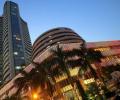
Oil and gas sectot may not put up good numbers in Q4.

The government kept its nerve in the face of a massive shock. It chose not to resort to a massive fiscal stimulus. It focused instead on providing liquidity support and easing restrictions on movement in stages, observes T T Ram Mohan.
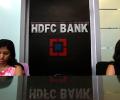
If customers did not see value in what we provide them at the price point at which we provide these, they would not have been there with us in such a competitive market, says HDFC deputy managing director Paresh Sukthankar.

'We have the more difficult reforms to do such as the reduction of subsidy, the insurance and pension sector reform, eliminating bureaucratic red tape and implementing Goods and Services Tax'

Shifting to floating rate deposits can work as an anaesthetic gel for some customers, points out Tamal Bandyopadhyay.

Economic Affairs secretary S C Garg said inflation has consistently come down since 2014 and will not cross 4 per cent this fiscal.

The protests brought home the fact that the Sri Lankan public is in no mood for halfway measures, as voices against Rajapaksa 'family rule' and 'securitisation' of the civilian administration began sidestepping the more critical economic crisis, affecting the nation and afflicting the individual, observes Sri Lanka watcher N Sathiya Moorthy.

It has once again returned to strong growth after a brief hiatus, spurred by the return of investors' confidence (and cash) in India's online food ordering sector.

Ahead of India's annual budget presentation next week, IMF's chief economist Gita Gopinath has favoured the extension of the pandemic support measures, thrust on investment in infrastructure and expanding health sectors programmes like Ayushman Bharat, and a very credible divestment path for commercially viable companies. The Indian government has provided a lot of schemes for small and medium enterprises, most of which is in the form of liquidity support, Gopinath told PTI on Tuesday. "And you want to revisit it and see how effectively that is working and see whether additional support may need to be provided," she said while responding to a question on her recommendations to Finance Minister Nirmala Sitharaman, ahead of her presentation of the annual Union Budget on February 1. It would be a good time for banks and Non-Banking Financial Companies (NBFCs) to raise capital given the attractiveness of financing conditions at this point, she said.

Since last month, the realty (down 23%), auto (down 16%) and finance (down 14%) indices have underperformed the market by falling over 13%, as against 8% decline in the benchmark indices

Watchdogs of the economy have not been barking and it is high time we noticed it, says Shreekant Sambrani.
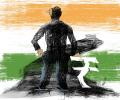
Risk aversion is currently a dominant depressant to economic recovery, points out Shankar Acharya, former chief economic advisor to the Government of India.
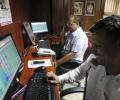
Metals, auto and banking shares were in the limelight in this session; the FMCG pack, however, ended lower.

At the end of 2018-19, the Tata group had a consolidated debt of Rs 2.77 trillion. Tatas not only plan to avoid big-ticket acquisitions for now, the group's main focus will be on improving key metrics and reduce debt, say Shally Seth Mohile & Dev Chatterjee.

Most of the hirings are, however, in the entry or junior level.

Gold, which was hovering around $1,321 an ounce in January 2019, has already breached $1,600 per ounce in the past few sessions to a seven-year high.
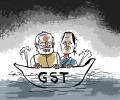
The collections stood at Rs 98,202 crore in the month, against Rs 1.02 trillion in July. The figures indicate continuation of economic slow down which was reflected in the gross domestic product (GDP) growth which plummeted to a 25-quarter low of 5 per cent in the first quarter of 2019-20, experts said.
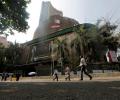
Wipro rose the most, up 3.12 per cent, ahead of its board meeting to discuss buyback of shares.

Change will have to begin with Mr Modi, who by all accounts has shown little active interest in macro-economic issues, preferring instead to focus on the effective implementation of projects and programmes, points out T N Ninan.

Investor sentiment got a boost following remarks from the Russian President Putin that allayed fears of an imminent military conflict in Ukraine

A revival in investment is likely to be a key near-term initiative.
In a circular dated May 20, Sebi had directed the listed companies to evaluate the impact of Covid-19 on their capital and financial resources, profitability, liquidity position, assets, and ability to service debt. Instead, companies have spoken about the number of plants, warehouses and distribution centres that have resumed operations; work-from-home and safety measures undertaken for employees; and the labour shortage they are facing.

HR Guru Mayank Rautela offers practical advice.
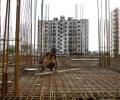
The construction sector is now India's second-largest employer after agriculture, the trend coinciding with India's high-growth phase and decline in poverty levels

The S&P BSE Midcap and the S&P BSE Smallcap indices slipped in red to shed over 1% each

Indian economy is set for a 'goldilocks' period -- used to describe a timeframe of high growth and low inflation -- while it can become Asia's fastest growing economy in 2016, Japanese financial major Nomura said.

TCS has done better than Infosys in sequential and yearly revenue growth so far this financial year.
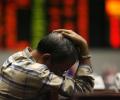
In the December quarter, Sensex earnings had contracted 5 per cent.
